Conceptual impressions surrounding this post have yet to be substantiated, corroborated, confirmed or woven into a larger argument, context or network. Objective: To generate symbolic links between scientific discovery, design awareness and consciousness.
"The universe cannot be read until we have learned the language and become familiar with the characters in which it is written. It is written in mathematical language, and the letters are triangles, circles and other geometrical figures, without which means it is humanly impossible to comprehend a single word. Without these, one is wandering about in a dark labyrinth."
Galileo Galilei
* * *
A designed language (DL) tells a symbolic story of balance, experience, definition and measure.
A designed language focuses upon the moment of meaningful timelessness for purposes of transition and transformation.
A designed language is both informative and revealing, measurable and immeasurable, linear and conceptual.
A designed language is both literal and figurative, generated by an intuitive imagination rooted in subjective and insightful perception/observation, i.e. awareness.
A designed language expands conscious awareness by means of the subconscious both in meaning and purpose.
A designed language creates a special attraction through coherent resonance exercised in relative space/time in order to be made manifest/apparent.
A designed language incorporates its own set of symbols for purposes of growth, expansion and interaction.
A designed language assists in the timeless quest to know, understand and experience balance and harmony.
A designed language brings energy, light and information to greater consciousness by means of symbol and metaphor.
A designed language establishes the link between meaning and purpose.
A designed language creates and harbors the most dynamic circumstances solely for the transition of change<>energy (CE) into light, energy and information.
The intuition gives rise to patterns of attraction (fractal, concepts). The imagination gives rise to its formation (holographic, ideas) and geometry gives rise to its structure tangible and/or intangible.
A designed language is subjective in content and context, a feeling sensed between the emotions of the heart and the intelligence of the mind. Each event and experience is unique to the perceiver/observer. There is no commonality shared except for experiencing the existence of a designed presence.
Design creates and harbors a personal symbolic language that is logical, semiotic, implicative, cognitive, purposeful and meaningful.
We each possess a unique design language of our own that rests at a point in timelessness between the tangible and the intangible.
Designs are created in order to hear the sound of one's own silence.
Design brings forth an embodiment of knowing ever spoken but rarely heard.
Design makes Life incredibly simple through the use of signs,, symbols, metaphor and analogy.
* * *
A designed language is a symbolic system that conveys balance, transformation, and growth. It is a timeless tool for transition, blending the literal and figurative, the measurable and immeasurable. Rooted in intuition and subjective perception, it reveals deeper meanings and connects the conscious mind with the subconscious. This unspoken language, formed through unique patterns and symbols, fosters awareness and understanding by linking meaning and purpose.
Through its metaphysical origins, a designed language uses symbols and metaphors to bring energy, light, and information into greater consciousness. It creates resonance and attraction in space and time, facilitating dynamic change and transformation. Personal and subjective, it bridges the emotions of the heart with the intelligence of the mind, offering everyone a unique experience.
Ultimately, a designed language embodies the silent expression of knowing, existing in the space between the tangible and intangible, and offering a path to deeper understanding and harmony. It is a tool for personal growth, interaction, and the eternal quest for balance and meaning.
* * *
* * *
* * *
“We must learn to recognize what is being revealed even though it is always open to interpretation. We are also subject to delusions and misperceptions, so we need to learn discernment. We need to focus on our own dynamic process, not just its finite contents, personalistic signs and symbols.
Images and symbols, like language, can be ambiguous. Piantadosi et al (2011) have shown that all efficient communication systems will be ambiguous, assuming that context is informative about meaning. They also argue that ambiguity allows for greater ease of processing by permitting efficient linguistic units to be re-used. We can imagine the same is true for symbols. Theoretical analysis suggests that ambiguity is a functional property of language that allows for greater communicative efficiency.
But, all we ever really talk about is ourselves and our own processes. Pioneered by William James, Sigmund Freud, and Carl Gustav Jung, Depth Psychology is the study of how we dialogue with the Unconscious via symbols, dreams, myth, art, nature. A symbol is something which can have many meanings at once. By paying attention to the messages that show up from beyond our conscious egos, we can be guide to greater understanding, transformation, and integration with the world around us, inner and outer.”
“The greatest barrier to hearing the Universe’s wisdom is not external noise but internal chatter. The constant stream of thoughts, judgements, memories and projections creates a mental static that drowns out the subtle frequencies of Universal communication.”
Awareness brings forward a “sense of consciousness” by fostering correspondences and fusing the concepts of meaning and purpose. Metaphysical in content and context, quantum, fractal and holographic in representation, all forms of energy/Life are revealed and made apparent by means of Design. Design is lovingly veiled in all that can be seen, known, measured and/or felt. (07.09.2023)
Design describes a metaphysical and multidimensional process. The design process is dependent upon knowledge, understanding, intention, intuition, imagination and awareness. Design creates a network of energy in motion (EIM) between fields/states/points/agents and patterns of awareness. Design creates a virtual, symbiotic and metaphoric lattice between consciousness, the subconscious and the unconscious, the tangible and the intangible, the known and the unknown, the seen and the unseen. All forms of energy in motion are based upon principles of meaning and purpose both felt and understood. (01.13.2023)
What is a designer?
Designers are men and women who are faithful and trustworthy to themselves and others, who creatively abide and amalgamate their skills and knowledge with love and integrity - the goal: personal, collective, global and soular balance and harmony.(07.01.2023)
* * *
* * *
To construct a design language for yourself based on the principles laid out in this text, it’s about creating a symbolic, personal system that reflects your inner world, intuition, and experience. Here's how you might approach it, broken down from the text:
1. Start with Awareness and Observation:
• Deep Awareness: You need to be deeply aware of both your inner feelings and the outer world. This means reflecting on your emotions, thoughts, and experiences—anything that stands out or has significance. You’re trying to capture how you feel and experience things, not just the surface-level stuff.
• Intuition and Perception: Tap into your intuitive understanding of the world. What feels right to you? What resonates deeply? The language you create will stem from this personal insight.
2. Use Metaphor and Symbolism:
• Symbolic Representation: Your design language will likely be built upon symbols, metaphors, and analogies that resonate with you. For example, you might choose a symbol to represent “growth,” or you might use light as a metaphor for clarity or enlightenment.
• Personal Resonance: These symbols should have meaning only to you, grounded in your personal experiences and sense of purpose.
3. Balance Between Tangible and Intangible:
• Conceptual Structure: Your design language can be both abstract and practical, combining both conceptual and literal elements. It’s about balance—things you can feel and things you can’t quite define yet.
• Fractals and Geometry: Geometry, which is a core element of structure in design, can help organize your language in a way that balances both the tangible (things you can touch, measure, or interact with) and the intangible (feelings, thoughts, dreams).
4. Dynamic Interaction:
• Personal Growth and Transformation: The language you create should not be static—it should help guide you through change and growth. How can you represent transformation or energy? How do you translate personal shifts into symbols or design forms?
• Incorporate Energy and Light: Think about your design as a tool to bring clarity, illumination, or understanding to specific areas of your life or experiences. Symbols that evoke light or energy can be used to signal moments of awareness or insight.
5. Unspoken, Yet Expressive:
• Implied Meaning: Your design language will not be verbal or directly spoken; rather, it will communicate through feelings, symbols, or even actions. It’s more about creating something that feels right and communicates to you without needing a spoken word.
• Resonance in Space/Time: The designs and symbols should align with your personal sense of space and time. They should evoke a certain energy or feeling when experienced in your life or environment.
6. Create a Cohesive Symbol System:
• Set of Symbols: Start to build a personal lexicon of symbols, shapes, colors, or even materials that evoke specific meanings to you. These can be abstract or concrete but should have consistency in how they represent aspects of your experience.
• Purposeful and Meaningful: Each symbol should have a clear purpose—whether it’s to represent a certain emotion, goal, or experience. It should provide clarity and guide you toward deeper understanding.
7. Incorporate Emotional and Mental Dimensions:
• Heart and Mind Connection: Focus on the interplay between the emotional and cognitive parts of your design language. The symbols should reflect an understanding between feelings (heart) and thoughts (mind), allowing your design language to operate on both an emotional and intellectual level.
8. Embody Silence and Simplicity:
• Simplicity in Design: The language you create should bring clarity and simplicity, not confusion. Avoid overcomplicating it—let it speak for itself without needing words. Think of your design as a tool that “hears the sound of silence,” a quiet, subtle expression of meaning.
• Timeless and Immeasurable: Allow your design language to exist beyond time, capturing something deep and personal that can still evolve with you, but always stay connected to your core values.
9. Personal and Unique:
• Subjective to You: Your design language should be wholly personal. No one else will see the world the way you do, so your design language should reflect your unique perspective. Embrace what feels authentic to you.
• Unifying the Tangible and Intangible: Design elements might represent tangible objects (like geometric forms) but also intangible concepts (like dreams, aspirations, or transformations).
Practical Steps to Begin:
1. Identify Core Symbols: Think about the key elements in your life—emotionally, mentally, or spiritually. What symbols, colors, or shapes resonate with these aspects? Create representations of these themes.
2. Define Metaphors: What metaphors can you use to reflect personal transformations, growth, or challenges in your life? Light, energy, growth, expansion—all could be symbols you work with.
3. Create a Visual Vocabulary: You might sketch out symbols, write about certain metaphors, or create visual representations. Begin by defining each element and how it relates to your inner world.
4. Experiment with Forms: You can experiment with shapes, colors, and textures that feel right. Think of each one as a “word” in your design language.
5. Integrate it into Your Daily Life: Use your symbols in physical objects around you, in your home or workspace, or in your creative projects. Let them begin to speak for you, silently.
This design language isn’t meant to be rigid or fixed—it's something that will evolve with you over time. It’s a way for you to translate your experiences, thoughts, and feelings into a visual, symbolic form that expresses your unique presence and path.
The author generated this text in part with GPT-3, OpenAI’s large-scale language-generation model. Upon generating draft language, the author reviewed, edited, and revised the language to their own liking and takes ultimate responsibility for the content of this publication.
Be assured you will not discover all the answers to your inquiries here. Continue to investigate into your role as observer and creator in a design of your own making. Be aware of the by-products and outcomes that surround your every choice and decision.
Conceptual impressions surrounding this post are yet to be substantiated, corroborated, confirmed or woven into a larger argument, context or network.
metaphornoun afigure of speechin which a word or phrase is applied to anobjectoractionto which it is not literally applicable: •a thingregardedasrepresentativeor symbolic of something else,especiallysomethingabstract:
Design is symbolic in essence and conceptual in origin. Design is the metaphor for Life - a self- contained, unified network in complete and abstract coalescence, a paradoxical amalgam meant to represent something else in a symbolic manner. Design's metaphors are linked to everything considered to be humanly imaginable. Design represents both the perspective of an observer and the context, i.e. situation, in which the observation or experience takes place. The relationship between observer and the observed generate a variety of intimations, which are symbolic in character and interpretation.
"As a plant produces its flower, so the psyche creates its symbols."
Carl Jung
Life appears before our awareness symbolically. You might say Life and Design are synonymous.
symbolicallyadverb:1purely in terms of what is being represented or implied:2as or by means of a symbol or symbolism:
Design serves many purposes and is intimately associated with a wide array of meanings. The word "sign" is clearly marked in the English spelling of design. Design is figuratively embodied in the form of a sign or symbol.Fgurativelyadverb:1used to indicate a departure from a literal use of words; metaphorically:we left a lot of peopleliterally and figurativelyin the dark|[sentence adverb]:Ididbump into—figuratively speaking—quite a few interesting people. 2 ina style representing forms that are recognizably derived from life
Design Consciousness is both tangible and intangible - a phenomenon that symbolically characterizes the relationship between meaning and purpose. A sign becomes a symbol by engaging an undeniable and engaging awareness, a feeling made apparent by means of observation. A sign becomes symbolic by means of resonating within the subconscious of an observer.
A sign is the guiding light of the ego - a symbol, the guiding light of the soul.
* * *
***
"Part of the human Self or Soul is not subject to laws of space and time."
Carl Jung
Design is a catalytic language of visible and invisible means.
The language of Light remains unspoken. Design embraces the unspoken word.
Design creates a multidimensional resonance between fields of energy, i.e. the seen and the unseen - coherent configurations of a vibratory nature made appropriate/designed for the context in which they are observed. Design is fundamental to the creative process.
coherencenoun1the quality of beinglogicalandconsistent:2thequalityof forming a unifiedwhole:
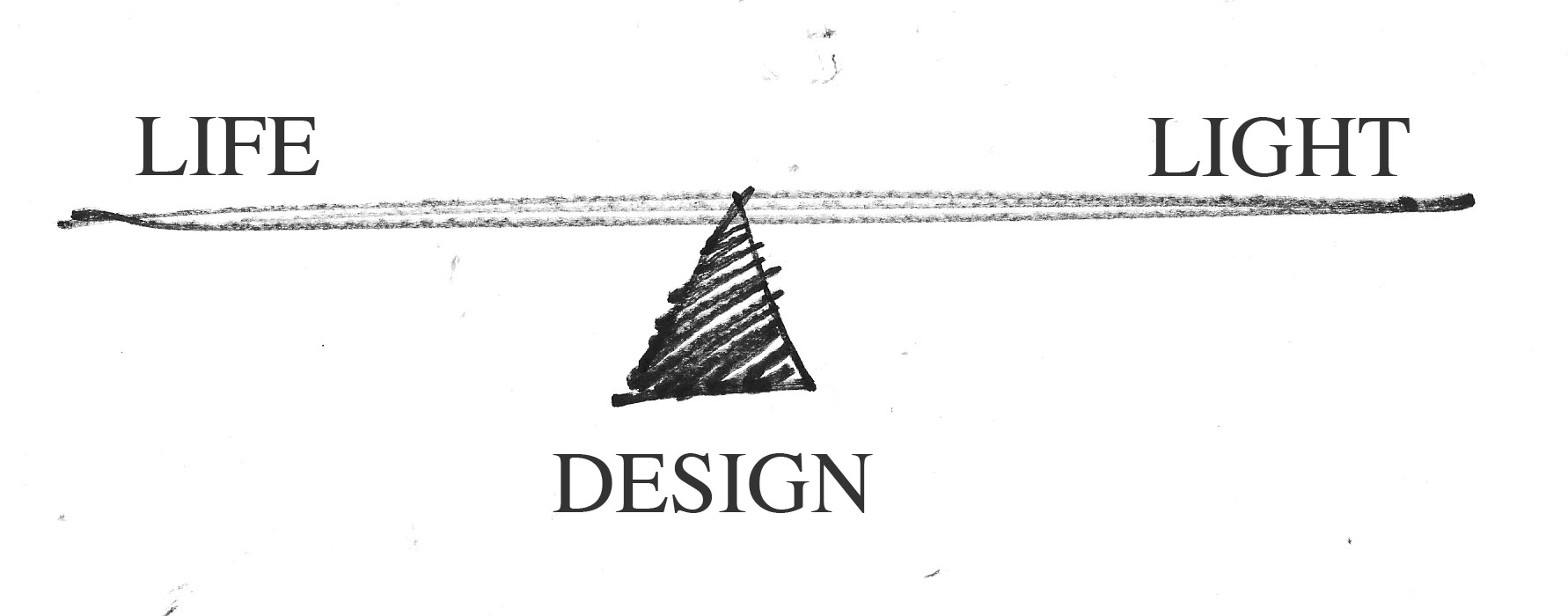
Design facilitates the transformation of energy from one "state/field" to another. Design embodies the concept of focus/attention with respect to generating a balance/harmony between interdependent conditions. These situations create environments/situations that are potentially synergetic, synchronistic, emergent, and/or entangled while centered in the moment. Design creates the fulcrum between Life and Light and is instrumental in creating the most appropriate relationships for the situation at hand. Design is a formative process.
These symbolic relationships appear to be animated by virtue of energy being in continuous motion. When appearing to be stabilized in the relative form of a network/field, vibratory energy (Light) will give the impression of "materializing", i.e. taking on a geometry in the form of a pattern of connections/relationships unique to the circumstance in the moment.
Note: a hologram is a good example of this transformation of Light energy into an observable "form" of its own. Form is a shadowed re-presentation of the energy that streams between certain virtual positions (fermions?), static locations of past impressions that together append to each other in the mind and heart of the observer. An observer initiates the shape/response to every situation by means of the imagination responding to the urges of an intuition typically based in a belief system padded with experience. This point of transition and transformation harbors the potential for further substantiation into matter, if so desired by the designer.
Design represents a silent language that creates and develops a multidimensional bridge between the Source of Light and the phenomenon we know as Life. Design provides the conduit between form and formlessness. Design brings to Reality the connection between Life and our perception of it. In other words, Design re-presents the presence of a Creative Source, a field of deep attachment and connection at the heart of Life. We are all sources of energy in our own right, all focusing upon a variety of designs and designations of our own while traveling several autonomous paths patterned about coherent resources ... each an active participant in a network of Light.
Design creates the fulcrum between Life and Light and is instrumental in creating the most appropriate relationships both in meaning and purpose.
fulcrumnoun(pluralfulcra|-krə|orfulcrums)the pointonwhichaleverrestsorissupportedand on which it pivots.•a thingthatplaysa central or essential role in an activity, event, or situation:https://phys.org/news/2020-12-fragments-energynot-particlesmay-fundamental-blocks.html, https://designconsciousness.blogspot.com/2012/09/design-metaphysics-torus.html* * *This passage presents an intricate and profound meditation on the nature of design, its symbolic and metaphysical connections to life, and its role in the human experience. The text draws from deep philosophical ideas, particularly from Carl Jung’s perspective on symbols, and the language of design is explored as both a tangible and intangible force that connects life and light, form and formlessness.Here are a few key takeaways and reflections:1. Design as Symbolic and Conceptual: Design is described as symbolic, meaning it represents something beyond its immediate appearance. It serves as a metaphor for life, representing a unified, abstract whole that transcends literal form. This suggests that design, in its truest sense, is not just about creating objects or structures, but about conveying deeper meanings and connections. 2. The Observer and the Observed: The relationship between the observer and the observed is crucial in the process of design. Design is not just about creating something that looks good; it is about the experience and the emotions it evokes in the observer. It has the power to affect and shape perception, signaling the role of context in interpretation. 3. Design and the Unspoken Word: The idea that design "embraces the unspoken word" is an interesting concept. This suggests that design communicates beyond verbal or written language—it speaks through forms, shapes, and patterns that resonate on a deeper, often subconscious level. It speaks to the senses and emotions, providing an intuitive understanding of the world around us. 4. The Transformative Power of Design: Design is portrayed as a dynamic force that facilitates the transformation of energy. This reflects its role in creating balance, harmony, and alignment in various contexts, whether in art, architecture, or human experience. Design bridges the gap between abstract ideas and their materialization in the world. 5. Light, Life, and Energy: The passage emphasizes the relationship between life, light, and energy. Design is seen as a form of energy in motion—vibrating and transforming in a way that brings abstract concepts into observable form. This is likened to the process of a hologram, where light takes on form, yet remains fundamentally energetic and interconnected. The idea of design as a "catalytic language" suggests that it is a conduit for change and transformation. 6. Creation of Meaning and Purpose: Ultimately, design is not just about aesthetics; it is about creating meaning and purpose. It provides the framework within which relationships and experiences are shaped. The symbolic nature of design imbues it with the power to resonate deeply with the observer, creating connections that transcend the surface. The passage’s themes align with a broader philosophical understanding of design as an active, energetic force—a catalyst for transformation and the creation of meaning in the world. It challenges us to see design not merely as a tool for aesthetic or functional purpose but as a profound process that connects us to the deeper layers of reality and consciousness. This perspective invites designers and creators to approach their work with a deeper awareness of how their designs affect, influence, and shape both the external world and the internal world of the observer.* * *DESIGN AND THE OBSERVER“Thus, bearing in mind that thought struggles incessantly against the treachery of language and that what we observe and describe is the observer himself, we may nonetheless proceed to investigate the successive phases in our becoming human beings. Throughout these phases, the experience (das Erlebnis) of ourselves as an intensity (imaged and felt as a “god”, lha) setting up its own spatiality (imaged and felt as a “house” khang) is present in various intensities of illumination that occur within ourselves as a “temple.” A corollary of this Erlebnis is its light character manifesting itself in various “frequencies” or colors. This is to say, since we are beings of light we display this light in a multiplicity of nuances.[33] In the above block quote the trikaya is encoded as: dharmakaya “god”; sambhogakaya “temple” and nirmanakaya “house”. 33. Herber V. Günther (1996). The Teachings of Padmasambhava(Hardcover ed.). Leiden, Netherlands: E. J. Brill. pp. 115–116. https://en.wikipedia.org/wiki/Classical_element
An observer is a witness to an event. A witness gives evidence to a phenomenon, event or personal experience by means of confirmation and/or supporting evidence. This process is heavily dependent upon the belief system/s initiated and employed by the observer. Confirmation, verification, testimony, corroboration, authentication, substantiation, evidence, and validation should be key in proving an event to be real. Yet due to the multitude of belief systems we support, encounter and are engaged in Life the idea of defining who an observer remains controversial.
It is upon this premise that we must prepare to broaden our current understanding of Light, Life and Design. We need to acknowledge the fact that any understanding of what we think and/or believe consciousness to be will continue to expand and contract (change) by virtue of these beliefs, levels of awareness, events, experiences and our POV in the moment. We need to understand that consciousness is a design of our own making.
It is difficult to escape the realization that design is an integral part of consciousness, our inputs and outputs are mental, emotional, physical and of a nature that is difficult, if not impossible to fully describe or conceive. Every impression describes a particular type of energy-in-motion that is symbolic in character, essence and expression, the most subtle being "spiritual" in nature. The most inclusive impressions are delicate, thoughtful, compassionate, insightful, upright and responsive. These impressions have been described as our "feelings", which are intuitively perceived (input) and imaginatively expressed (output).
ethernoun (alsoaether)Physics,archaicaveryrarefiedandhighlyelasticsubstance formerlybelievedtopermeateallspace,includingtheinterstices betweentheparticlesof matter, and to be the mediumwhosevibrations constituted light and other electromagnetic radiation.
We commonly share and describe our concepts of reality within the parameters of three-dimensional space and linear time. We become aware/cognizant of our consciousness by means of implementing design's invisible language of signs and symbols - and learn more of the meaning and purpose in support of these impressions through metaphor, analogy, allegory and simile. These subtle impressions are packaged and geometrically configured by means of attraction and assembled in the form of words, images, feelings, thoughts and substance. These impressions may be tangible or intangible, felt or ignored. In other words, all correspondences are meaningful exchanges of energy between agents and designed by the observer/s for the purpose of being "present in the moment."
Reality is symbolic in nature, a dualistic impression of every relationship we've created for ourselves within the parameters of observation and interpretation. Light and its opposite, the absence of it, * create a range of corresponding representations and relationships we believe and typically label as being real.
Light/Design, Light/Life and Life/Design are conceptual fields of energy seeking balance within the influences of each other. The power behind these correspondences is the urge/pulse to expand into the inner workings of a greater unknown (QFVP) searching for a common re-Source that would complement their relationship and bring balance to a greater macrocosmic network. The attractions (coherencies) supporting these relationships/pairings harbor the genesis for further growth, re-production and expansion.
* The opposite of Light is the absence of Light. The range between these opposites is darkness. Pure darkness is an oxymoron and therefore meaningless.
Interactions between fields of energy are represented in the symbol of the Vesica Piscis and is emblematic of the urge and desire to join opposites by creatively designing, i.e. unifying and thereby expanding from a position of duality. Blueprints, patterns and forms of energy support this expansion. These are patterns designed to be tangential in their meaning and purpose and metaphorically re-presented within each individual context ref. The Flower of Life.
Note: It should be remembered that these events are being perpetuated within a quantum field of virtual potential (QFVP) where change remains constant.
Each field overlaps the other together creating an identity and relevance to a central field of awareness simply by means of their symbolic relationship. Together these fields of energy symbolize the creation of a single common unity, a Source/Consciousness comprised of three qualities/fields of Energy that together bring into fruition a particular meaning and purpose. They are individually and collectively archetypal in essence. A coherent resonance/connection is configured between them,** sharing their essences in the creation of a "form of energy" that represents and strives for the symbolic internalization of harmony through the process of materialization, i.e. Design.
** patterns of coherency are vibrationally attributed to the context in which an event or experience becomes recognized and/or registered in the form of awareness.
This internal field seeking balance and harmony has no containment other than what might be symbolically represented by the "unknown" (QFVP). This field implies the existence of an infinite Presence that reaches beyond what might be considered "observable". A quantum field of virtual potential reaches beyond the constraints of three-dimensional space and time - there is no one single "language" that can fully describe and/or define it at this time within the contextual constraints of what might be considered the "field of human consciousness".
Design also signifies a process. Design harbors the potential to further open the door into the unknown, however ... you alone are the only one who can open it. I propose from a human POV, that in the future the concept of Design and in turn Reality, will become self-contained and synergistically apparent solely to enlighten our "field of consciousness" in a fashion that cannot be fully measured in the moment - sparks of awareness (light) that need no measurement.
"The Tao that can be described is not the everlasting Tao. Design merely inspires one along the Way."
Consciousness might best be viewed as a virtual field of light, energy and information - yet words so often get in the way.
* * *
This passage reflects a deep philosophical exploration of consciousness, reality, design, and the interplay between perception and the observer. At its core, it discusses how our understanding of the world, consciousness, and the nature of existence is shaped by our belief systems, experiences, and the symbols we use to interpret reality.
The idea that "consciousness is a design of our own making" suggests that our perceptions of reality, life, and existence are not fixed but are instead influenced by the mental, emotional, and physical states we experience. This introduces the notion of design not as something external but as a construct that emerges from our internal awareness and the dynamic interplay of different fields of energy. These fields—symbolized in the Vesica Piscis, Flower of Life, and other geometric patterns—represent the tension between opposites (e.g., light and darkness) and the creative forces that arise from these relationships.
The passage also suggests that reality is symbolic in nature, implying that everything we perceive is an interpretation of underlying energetic patterns. These symbols, signs, and forms are seen as vehicles for a deeper understanding of truth, which is continually expanding and contracting as we evolve in our awareness.
The concept of the Quantum Field of Virtual Potential and Probability (QFVPP) adds another layer of depth, indicating that change is constant and infinite possibilities are always at play. This concept emphasizes that reality cannot be fully captured or measured by the constraints of our current understanding of space, time, and language.
The final thoughts point toward a future in which reality and design become more self-contained and synergistically apparent to consciousness, suggesting that a higher state of awareness might be achievable, one that transcends conventional methods of measurement or external validation. This aligns with the Taoist notion that some aspects of existence cannot be fully described but must be experienced directly.
In essence, the passage is a call to expand our perception, embrace the fluid nature of consciousness, and recognize the interconnectedness of all things through design. It challenges us to acknowledge that our awareness is always in flux and that the very process of seeking truth and understanding is part of the design of consciousness itself.
The author generated this text in part with GPT-3, OpenAI’s large-scale language-generation model. Upon generating draft language, the author reviewed, edited, and revised the language to their own liking and takes ultimate responsibility for the content of this publication.
* * *
"I cannot define for you what God is. I can only say that my work has proved empirically that the pattern of God exists in every man and that this pattern has at its disposal the greatest of all his energies for transformation and transfiguration of his natural being. Not only the meaning of his life but his renewal and his institutions depend on his conscious relationship with this pattern of his collective unconscious."Carl JungIn homage to Carl Jung:"I cannot fully define for you what Design is. I can only say that my work is an attempt to reveal certain universal patterns of energy, light and information that are archetypal in quality and through symbolic means, represent the quintessential Source of a transformation and transfiguration of consciousness - a fountainhead that attempts to approach the meaning and purpose of Life by means of an eternal renewal, emerging symbolically from within own its collective Presence."C.G. Garant * * *
Born and raised in Chicago, Ill. I received my BFA and MFA from the University of Illinois, Urbana. Professor Emeritus Columbus College of Art and Design. I have taught, lectured and written about
design and the design process throughout my tenure as Dean of Industrial and Interior Design. My interests lie in demonstrating design as fundamental to consciousness, archetypal in context and the underlying language of change and transformation.
https://www.idsa.org/profile/carl-garant/