Conceptual impressions surrounding this post are yet to be substantiated, corroborated, confirmed or woven into a larger argument, context or network.
metaphornoun afigure of speechin which a word or phrase is applied to anobjectoractionto which it is not literally applicable: •a thingregardedasrepresentativeor symbolic of something else,especiallysomethingabstract:
Design is symbolic in essence and conceptual in origin. Design is the metaphor for Life - a self- contained, unified network in complete and abstract coalescence, a paradoxical amalgam meant to represent something else in a symbolic manner. Design's metaphors are linked to everything considered to be humanly imaginable. Design represents both the perspective of an observer and the context, i.e. situation, in which the observation or experience takes place. The relationship between observer and the observed generate a variety of intimations, which are symbolic in character and interpretation.
"As a plant produces its flower, so the psyche creates its symbols."
Carl Jung
Life appears before our awareness symbolically. You might say Life and Design are synonymous.
symbolicallyadverb:1purely in terms of what is being represented or implied:2as or by means of a symbol or symbolism:
Design serves many purposes and is intimately associated with a wide array of meanings. The word "sign" is clearly marked in the English spelling of design. Design is figuratively embodied in the form of a sign or symbol.Fgurativelyadverb:1used to indicate a departure from a literal use of words; metaphorically:we left a lot of peopleliterally and figurativelyin the dark|[sentence adverb]:Ididbump into—figuratively speaking—quite a few interesting people. 2 ina style representing forms that are recognizably derived from life
Design Consciousness is both tangible and intangible - a phenomenon that symbolically characterizes the relationship between meaning and purpose. A sign becomes a symbol by engaging an undeniable and engaging awareness, a feeling made apparent by means of observation. A sign becomes symbolic by means of resonating within the subconscious of an observer.
A sign is the guiding light of the ego - a symbol, the guiding light of the soul.
* * *
***
"Part of the human Self or Soul is not subject to laws of space and time."
Carl Jung
Design is a catalytic language of visible and invisible means.
The language of Light remains unspoken. Design embraces the unspoken word.
Design creates a multidimensional resonance between fields of energy, i.e. the seen and the unseen - coherent configurations of a vibratory nature made appropriate/designed for the context in which they are observed. Design is fundamental to the creative process.
coherencenoun1the quality of beinglogicalandconsistent:2thequalityof forming a unifiedwhole:
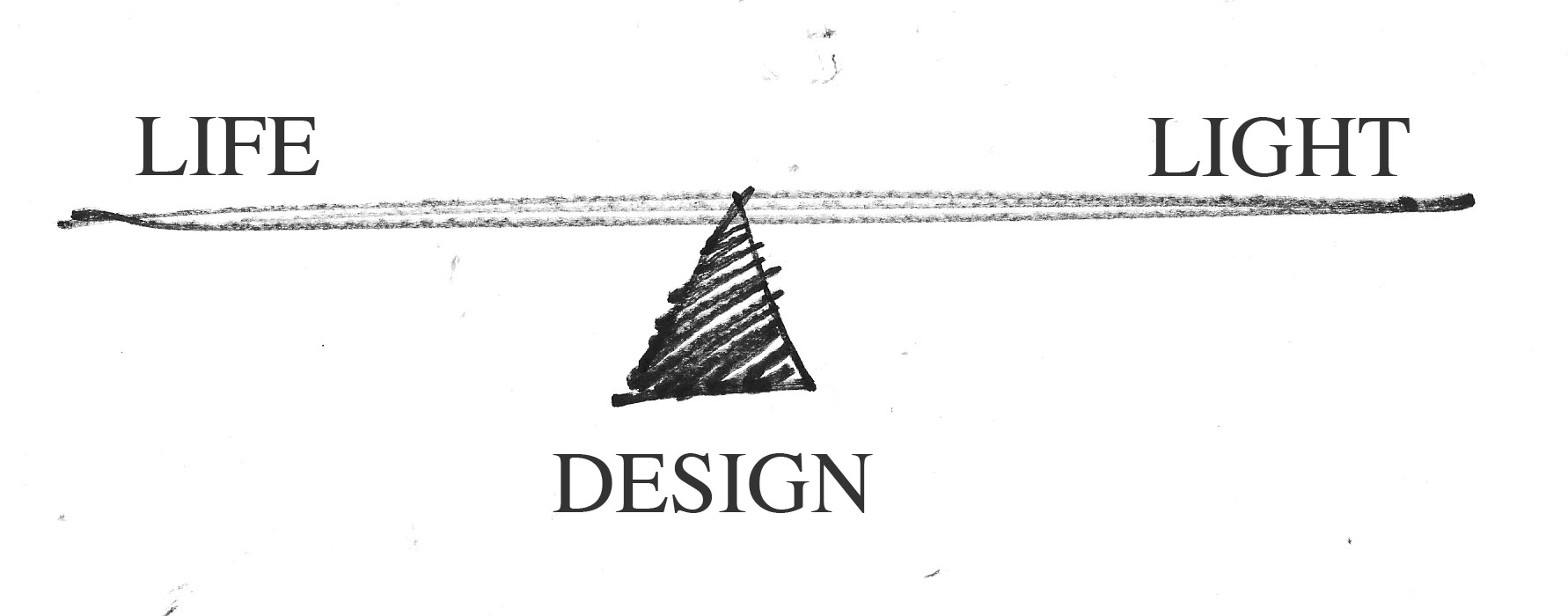
Design facilitates the transformation of energy from one "state/field" to another. Design embodies the concept of focus/attention with respect to generating a balance/harmony between interdependent conditions. These situations create environments/situations that are potentially synergetic, synchronistic, emergent, and/or entangled while centered in the moment. Design creates the fulcrum between Life and Light and is instrumental in creating the most appropriate relationships for the situation at hand. Design is a formative process.
These symbolic relationships appear to be animated by virtue of energy being in continuous motion. When appearing to be stabilized in the relative form of a network/field, vibratory energy (Light) will give the impression of "materializing", i.e. taking on a geometry in the form of a pattern of connections/relationships unique to the circumstance in the moment.
Note: a hologram is a good example of this transformation of Light energy into an observable "form" of its own. Form is a shadowed re-presentation of the energy that streams between certain virtual positions (fermions?), static locations of past impressions that together append to each other in the mind and heart of the observer. An observer initiates the shape/response to every situation by means of the imagination responding to the urges of an intuition typically based in a belief system padded with experience. This point of transition and transformation harbors the potential for further substantiation into matter, if so desired by the designer.
Design represents a silent language that creates and develops a multidimensional bridge between the Source of Light and the phenomenon we know as Life. Design provides the conduit between form and formlessness. Design brings to Reality the connection between Life and our perception of it. In other words, Design re-presents the presence of a Creative Source, a field of deep attachment and connection at the heart of Life. We are all sources of energy in our own right, all focusing upon a variety of designs and designations of our own while traveling several autonomous paths patterned about coherent resources ... each an active participant in a network of Light.
Design creates the fulcrum between Life and Light and is instrumental in creating the most appropriate relationships both in meaning and purpose.
fulcrumnoun(pluralfulcra|-krə|orfulcrums)the pointonwhichaleverrestsorissupportedand on which it pivots.•a thingthatplaysa central or essential role in an activity, event, or situation:https://phys.org/news/2020-12-fragments-energynot-particlesmay-fundamental-blocks.html, https://designconsciousness.blogspot.com/2012/09/design-metaphysics-torus.html* * *This passage presents an intricate and profound meditation on the nature of design, its symbolic and metaphysical connections to life, and its role in the human experience. The text draws from deep philosophical ideas, particularly from Carl Jung’s perspective on symbols, and the language of design is explored as both a tangible and intangible force that connects life and light, form and formlessness.Here are a few key takeaways and reflections:1. Design as Symbolic and Conceptual: Design is described as symbolic, meaning it represents something beyond its immediate appearance. It serves as a metaphor for life, representing a unified, abstract whole that transcends literal form. This suggests that design, in its truest sense, is not just about creating objects or structures, but about conveying deeper meanings and connections. 2. The Observer and the Observed: The relationship between the observer and the observed is crucial in the process of design. Design is not just about creating something that looks good; it is about the experience and the emotions it evokes in the observer. It has the power to affect and shape perception, signaling the role of context in interpretation. 3. Design and the Unspoken Word: The idea that design "embraces the unspoken word" is an interesting concept. This suggests that design communicates beyond verbal or written language—it speaks through forms, shapes, and patterns that resonate on a deeper, often subconscious level. It speaks to the senses and emotions, providing an intuitive understanding of the world around us. 4. The Transformative Power of Design: Design is portrayed as a dynamic force that facilitates the transformation of energy. This reflects its role in creating balance, harmony, and alignment in various contexts, whether in art, architecture, or human experience. Design bridges the gap between abstract ideas and their materialization in the world. 5. Light, Life, and Energy: The passage emphasizes the relationship between life, light, and energy. Design is seen as a form of energy in motion—vibrating and transforming in a way that brings abstract concepts into observable form. This is likened to the process of a hologram, where light takes on form, yet remains fundamentally energetic and interconnected. The idea of design as a "catalytic language" suggests that it is a conduit for change and transformation. 6. Creation of Meaning and Purpose: Ultimately, design is not just about aesthetics; it is about creating meaning and purpose. It provides the framework within which relationships and experiences are shaped. The symbolic nature of design imbues it with the power to resonate deeply with the observer, creating connections that transcend the surface. The passage’s themes align with a broader philosophical understanding of design as an active, energetic force—a catalyst for transformation and the creation of meaning in the world. It challenges us to see design not merely as a tool for aesthetic or functional purpose but as a profound process that connects us to the deeper layers of reality and consciousness. This perspective invites designers and creators to approach their work with a deeper awareness of how their designs affect, influence, and shape both the external world and the internal world of the observer.* * *DESIGN AND THE OBSERVER“Thus, bearing in mind that thought struggles incessantly against the treachery of language and that what we observe and describe is the observer himself, we may nonetheless proceed to investigate the successive phases in our becoming human beings. Throughout these phases, the experience (das Erlebnis) of ourselves as an intensity (imaged and felt as a “god”, lha) setting up its own spatiality (imaged and felt as a “house” khang) is present in various intensities of illumination that occur within ourselves as a “temple.” A corollary of this Erlebnis is its light character manifesting itself in various “frequencies” or colors. This is to say, since we are beings of light we display this light in a multiplicity of nuances.[33] In the above block quote the trikaya is encoded as: dharmakaya “god”; sambhogakaya “temple” and nirmanakaya “house”. 33. Herber V. Günther (1996). The Teachings of Padmasambhava(Hardcover ed.). Leiden, Netherlands: E. J. Brill. pp. 115–116. https://en.wikipedia.org/wiki/Classical_element
An observer is a witness to an event. A witness gives evidence to a phenomenon, event or personal experience by means of confirmation and/or supporting evidence. This process is heavily dependent upon the belief system/s initiated and employed by the observer. Confirmation, verification, testimony, corroboration, authentication, substantiation, evidence, and validation should be key in proving an event to be real. Yet due to the multitude of belief systems we support, encounter and are engaged in Life the idea of defining who an observer remains controversial.
It is upon this premise that we must prepare to broaden our current understanding of Light, Life and Design. We need to acknowledge the fact that any understanding of what we think and/or believe consciousness to be will continue to expand and contract (change) by virtue of these beliefs, levels of awareness, events, experiences and our POV in the moment. We need to understand that consciousness is a design of our own making.
It is difficult to escape the realization that design is an integral part of consciousness, our inputs and outputs are mental, emotional, physical and of a nature that is difficult, if not impossible to fully describe or conceive. Every impression describes a particular type of energy-in-motion that is symbolic in character, essence and expression, the most subtle being "spiritual" in nature. The most inclusive impressions are delicate, thoughtful, compassionate, insightful, upright and responsive. These impressions have been described as our "feelings", which are intuitively perceived (input) and imaginatively expressed (output).
ethernoun (alsoaether)Physics,archaicaveryrarefiedandhighlyelasticsubstance formerlybelievedtopermeateallspace,includingtheinterstices betweentheparticlesof matter, and to be the mediumwhosevibrations constituted light and other electromagnetic radiation.
We commonly share and describe our concepts of reality within the parameters of three-dimensional space and linear time. We become aware/cognizant of our consciousness by means of implementing design's invisible language of signs and symbols - and learn more of the meaning and purpose in support of these impressions through metaphor, analogy, allegory and simile. These subtle impressions are packaged and geometrically configured by means of attraction and assembled in the form of words, images, feelings, thoughts and substance. These impressions may be tangible or intangible, felt or ignored. In other words, all correspondences are meaningful exchanges of energy between agents and designed by the observer/s for the purpose of being "present in the moment."
Reality is symbolic in nature, a dualistic impression of every relationship we've created for ourselves within the parameters of observation and interpretation. Light and its opposite, the absence of it, * create a range of corresponding representations and relationships we believe and typically label as being real.
Light/Design, Light/Life and Life/Design are conceptual fields of energy seeking balance within the influences of each other. The power behind these correspondences is the urge/pulse to expand into the inner workings of a greater unknown (QFVP) searching for a common re-Source that would complement their relationship and bring balance to a greater macrocosmic network. The attractions (coherencies) supporting these relationships/pairings harbor the genesis for further growth, re-production and expansion.
* The opposite of Light is the absence of Light. The range between these opposites is darkness. Pure darkness is an oxymoron and therefore meaningless.
Interactions between fields of energy are represented in the symbol of the Vesica Piscis and is emblematic of the urge and desire to join opposites by creatively designing, i.e. unifying and thereby expanding from a position of duality. Blueprints, patterns and forms of energy support this expansion. These are patterns designed to be tangential in their meaning and purpose and metaphorically re-presented within each individual context ref. The Flower of Life.
Note: It should be remembered that these events are being perpetuated within a quantum field of virtual potential (QFVP) where change remains constant.
Each field overlaps the other together creating an identity and relevance to a central field of awareness simply by means of their symbolic relationship. Together these fields of energy symbolize the creation of a single common unity, a Source/Consciousness comprised of three qualities/fields of Energy that together bring into fruition a particular meaning and purpose. They are individually and collectively archetypal in essence. A coherent resonance/connection is configured between them,** sharing their essences in the creation of a "form of energy" that represents and strives for the symbolic internalization of harmony through the process of materialization, i.e. Design.
** patterns of coherency are vibrationally attributed to the context in which an event or experience becomes recognized and/or registered in the form of awareness.
This internal field seeking balance and harmony has no containment other than what might be symbolically represented by the "unknown" (QFVP). This field implies the existence of an infinite Presence that reaches beyond what might be considered "observable". A quantum field of virtual potential reaches beyond the constraints of three-dimensional space and time - there is no one single "language" that can fully describe and/or define it at this time within the contextual constraints of what might be considered the "field of human consciousness".
Design also signifies a process. Design harbors the potential to further open the door into the unknown, however ... you alone are the only one who can open it. I propose from a human POV, that in the future the concept of Design and in turn Reality, will become self-contained and synergistically apparent solely to enlighten our "field of consciousness" in a fashion that cannot be fully measured in the moment - sparks of awareness (light) that need no measurement.
"The Tao that can be described is not the everlasting Tao. Design merely inspires one along the Way."
Consciousness might best be viewed as a virtual field of light, energy and information - yet words so often get in the way.
* * *
This passage reflects a deep philosophical exploration of consciousness, reality, design, and the interplay between perception and the observer. At its core, it discusses how our understanding of the world, consciousness, and the nature of existence is shaped by our belief systems, experiences, and the symbols we use to interpret reality.
The idea that "consciousness is a design of our own making" suggests that our perceptions of reality, life, and existence are not fixed but are instead influenced by the mental, emotional, and physical states we experience. This introduces the notion of design not as something external but as a construct that emerges from our internal awareness and the dynamic interplay of different fields of energy. These fields—symbolized in the Vesica Piscis, Flower of Life, and other geometric patterns—represent the tension between opposites (e.g., light and darkness) and the creative forces that arise from these relationships.
The passage also suggests that reality is symbolic in nature, implying that everything we perceive is an interpretation of underlying energetic patterns. These symbols, signs, and forms are seen as vehicles for a deeper understanding of truth, which is continually expanding and contracting as we evolve in our awareness.
The concept of the Quantum Field of Virtual Potential and Probability (QFVPP) adds another layer of depth, indicating that change is constant and infinite possibilities are always at play. This concept emphasizes that reality cannot be fully captured or measured by the constraints of our current understanding of space, time, and language.
The final thoughts point toward a future in which reality and design become more self-contained and synergistically apparent to consciousness, suggesting that a higher state of awareness might be achievable, one that transcends conventional methods of measurement or external validation. This aligns with the Taoist notion that some aspects of existence cannot be fully described but must be experienced directly.
In essence, the passage is a call to expand our perception, embrace the fluid nature of consciousness, and recognize the interconnectedness of all things through design. It challenges us to acknowledge that our awareness is always in flux and that the very process of seeking truth and understanding is part of the design of consciousness itself.
The author generated this text in part with GPT-3, OpenAI’s large-scale language-generation model. Upon generating draft language, the author reviewed, edited, and revised the language to their own liking and takes ultimate responsibility for the content of this publication.
* * *
"I cannot define for you what God is. I can only say that my work has proved empirically that the pattern of God exists in every man and that this pattern has at its disposal the greatest of all his energies for transformation and transfiguration of his natural being. Not only the meaning of his life but his renewal and his institutions depend on his conscious relationship with this pattern of his collective unconscious."Carl JungIn homage to Carl Jung:"I cannot fully define for you what Design is. I can only say that my work is an attempt to reveal certain universal patterns of energy, light and information that are archetypal in quality and through symbolic means, represent the quintessential Source of a transformation and transfiguration of consciousness - a fountainhead that attempts to approach the meaning and purpose of Life by means of an eternal renewal, emerging symbolically from within own its collective Presence."C.G. Garant * * *
Conceptual impressions surrounding this post are yet to be substantiated, corroborated, confirmed or woven into a larger argument, context or network.
Matter is the derivative of a consubstantial event.
derivative| dəˈrivədiv | adjective (typically of an artist or work of art) imitative of the work of another person, and usually disapproved of for that reason: an artist who is not in the slightest bit derivative. • originating from, based on, or influenced byDarwin's work is derivative of the moral philosophers. • [attributive] (of a financial product) having a value deriving from an underlying variable asset:equity-based derivative products. noun something that is based on another source: a derivative of the system was chosen for the Marine Corps’ V-22 tilt rotor aircraft. • (often derivatives) an arrangement or instrument (such as a future, option, or warrant) whose value derives from and is dependent on the value of an underlying asset: [as modifier] : the derivatives market. • a word derived from another or from a root in the same or another language. • a substance that is derived chemically from a specified compound: crack is a highly addictive cocaine derivative. • Mathematics an expression representing the rate of change of a function with respect to an independent variable. DERIVATIVES derivatively adverb ORIGIN late Middle English (in the adjective sense ‘having the power to draw off’, and in the noun sense ‘a word derived from another’): from French dérivatif, ive, from Latin derivativus, from derivare (see derive).
consubstantial|ˌkänsəbˈstan(t)SH(ə)l|adjective of thesamesubstance oressence(used especiallyofthethree persons ofthe Trinityin Christiantheology):Christ isconsubstantialwith the Father.DERIVATIVESconsubstantiality|ˌkänsəbˌstanSHēˈalədē|nounORIGINlate Middle English: fromecclesiasticalLatinconsubstantialis(translatingGreekhomoousios‘of onesubstance’),fromcon-‘with’+substantialis(seesubstantial).
substantial| səbˈstan(t)SHəl | adjective 1 of considerable importance, size, or worth: a substantial amount of cash. • strongly built or made: a row of substantial Victorian villas. • (of a meal) large and filling. • important in material or social terms; wealthy: a substantial Devon family. 2 concerning the essentials of something: there was substantial agreement on changing policies. 3 real and tangible rather than imaginary: spirits are shadowy, human beings substantial. DERIVATIVES substantiality | səbˌstan(t)SHēˈalədē | noun ORIGIN Middle English: from Old French substantiel or Christian Latin substantialis, from substantia ‘being, essence’ (see substance)
* * *
Consubstantial events originate from within a virtual field of potentiality.
virtual| ˈvərCH(o͞o)əl | adjective almost or nearly as described, but not completely or according to strict definition: the virtual absence of border controls. • Computing not physically existing as such but made by software to appear to do so: a virtual computer. See also virtual reality.• carried out, accessed, or stored by means of a computer, especially over a network:a virtual library | virtual learning. • Optics relating to the points at which rays would meet if produced backward. • Physics denoting particles or interactions with extremely short lifetimes and (owing to the uncertainty principle) indefinitely great energies, postulated as intermediates in some processes.DERIVATIVES virtuality | ˌvərCHo͞oˈalədē | noun ORIGIN late Middle English (also in the sense ‘possessing certain virtues’): from medieval Latin virtualis, from Latin virtus ‘virtue’, suggested by late Latin virtuosus.
field6 Physics the region in which a particular condition prevails, especially one in which a force or influence is effective regardless of the presence or absence of a material medium.• the force exerted or potentially exerted in a field: the variation in the strength of the field. 7 Mathematics a system subject to two binary operations analogous to those for the multiplication and addition of real numbers, and having similar commutative and distributive laws.
potential| pəˈten(t)SHəl | adjective [attributive] having or showing the capacity to become or develop into something in the future:a two-pronged campaign to woo potential customers. Noun 1 latent qualities or abilities that may be developed and lead to future success or usefulness: a young broadcaster with great potential | the potentials of the technology were never wholly controllable. • (often potential for/to do something) the possibility of something happening or of someone doing something in the future: pesticides with the potential to cause cancer| the crane operator's clear view reduces the potential for accidents. 2 Physics the quantity determining the energy of mass in a gravitational field or of charge in an electric field. DERIVATIVES potentiality | pəˌten(t)SHēˈalədē | nounpotentialize | -ˌlīz | verb
* * *
“The first philosophy (Metaphysics) is universal and is exclusively concerned with primary substance. ... And here we will have the science to study that which is just as that which is, both in its essence and in the properties which, just as a thing that is, it has. ... That among entities there must be some cause, which moves and combines things. ... There must then be a principle of such a kind that its substance is activity.”
Substantial events become self-evident when coherent.
coherent| ˌkōˈhirənt | adjective 1 (of an argument, theory, or policy) logical and consistent:they failed to develop a coherent economic strategy. • (of a person) able to speak clearly and logically: she was lucid and coherent and did not appear to be injured. 2 united as or forming a whole: divided into a number of geographically coherent kingdoms. 3 Physics (of waves) having a constant phase relationship.ORIGIN mid 16th century (in the sense ‘logically related to’): from Latin cohaerent- ‘sticking together’, from the verb cohaerere (see cohere).
* * *
What is observed in three-dimensional space and linear time are the effects and effects of a series of coherent events of both consubstantial and substantial origin.
three-dimensional | ˌTHrēdəˈmen(t)SH(ə)n(ə)l | adjective having or appearing to have length, breadth, and depth: a three-dimensional object. • (of a literary or dramatic work) sufficiently full in characterization and representation of events to be believable.
time | tīm | noun 1 the indefinite continued progress of existence and events in the past, present, and future regarded as a whole: travel through space and time | one of the greatest wits of all time. • the progress of time as affecting people and things: things were getting better as time passed. • time or an amount of time as reckoned by a conventional standard: it's eight o'clock Eastern Standard Time. • (Time or Father Time) the personification of time, typically as an old man with a scythe and hourglass.
USAGE Affectandeffectarebothverbsandnouns,but onlyeffectiscommonasanoun,usuallymeaningaresult,consequence,impression,etc.’:myfather'swarningshadnoeffectonmyadventurousness. Thenounaffectisrestricted almostentirelyto psychology (seeaffect3). As verbs,they are used differently. Affect most commonly means ‘produce an effect on, influence’:smokingduring pregnancycanaffectthe baby's development.Affect also means‘ pretend to have orfeel (something)’ (seeaffect2):she affected a concernforthosewhohadlost their jobs.Effect means ‘bring about’:the negotiatorseffectedanagreementdespitemany difficulties
* * *
The cause supporting these three-dimensional events originate beyond the scope/field of the observer.
cause| kôz | noun1 a person or thing that gives rise to an action, phenomenon, or condition: the cause of the accident is not clear. • reasonable grounds for doing, thinking, or feeling something: Faye's condition had given no cause for concern | class size is a cause for complaint in some schools | [with infinitive] : the government had good cause to avoid war. 2 a principle, aim, or movement that, because of a deep commitment, one is prepared to defend or advocate: she devoted her life to the cause of deaf people | I'm raising money for a good cause. 3 a matter to be resolved in a court of law. • an individual's case offered at law.
* * *
To perceive an event in three-dimensional space/time the observer must resonate to it.
perceive| pərˈsēv | verb [with object] 1 become aware or conscious of (something); come to realize or understand: his mouth fell open as he perceived the truth | [with clause] : he was quick to perceive that there was little future in such arguments. • become aware of (something) by the use of one of the senses, especially that of sight: he perceived the faintest of flushes creeping up her neck. 2 interpret or look on (someone or something) in a particular way; regard as: if Guy does not perceive himself as disabled, nobody else should | [with object and infinitive] : some geographers perceive hydrology to be a separate field of scientific inquiry. DERIVATIVES perceivable | pərˈsēvəb(ə)l | adjective perceiver noun ORIGIN Middle English: from a variant of Old French perçoivre, from Latin percipere ‘seize, understand’, from per- ‘entirely’ + capere ‘take’
resonate| ˈreznˌāt | verb [no object] 1 produce or be filled with a deep, full, reverberating sound: the sound of the siren resonated across the harbor. • evoke or suggest images, memories, and emotions:the words resonate with so many different meanings. • chiefly US (of an idea or action) meet with someone's agreement: the judge's ruling resonated among many of the women. 2 technical produce electrical or mechanical resonance: the crystal resonates at 16 MHz. ORIGIN late 19th century: from Latin resonat- ‘resounded’, from the verb resonare (see resound).
* * *
Reality is the result of the dynamic created between what is known and what is unknown.
reality | rēˈalədē | noun (plural realities) 1 the world or the state of things as they actually exist, as opposed to an idealistic or notional idea of them: he refuses to face reality | Laura was losing touch with reality. • a thing that is actually experienced or seen, especially when this is grim or problematic: the harsh realities of life in a farming community | the law ignores the reality of the situation. • a thing that exists in fact, having previously only existed in one's mind: the paperless office may yet become a reality. • the quality of being lifelike or resembling an original: the reality of Marryat's detail. • [as modifier] relating to reality TV: a reality show. 2 the state or quality of having existence or substance:youth, when death has no reality. • Philosophy existence that is absolute, self-sufficient, or objective, and not subject to human decisions or conventions. PHRASES in reality in actual fact (used to contrast a false idea of what is true or possible with one that is more accurate): she had believed she could control these feelings, but in reality that was not so easy. the reality is —— used to assert that the truth of a matter is not what one would think or expect: the popular view of the Dobermann is of an aggressive guard dog—the reality is very different. ORIGIN late 15th century: via French from medieval Latin realitas, from late Latin realis ‘relating to things’(see real1).
dynamic| dīˈnamik | adjective1 (of a process or system) characterized by constant change, activity, or progress: a dynamic economy. • Physics relating to forces producing motion. Often contrasted with static.• Linguistics (of a verb) expressing an action, activity, event, or process. Contrasted with stative.• denoting or relating to web pages that update frequently or are generated according to an individual's search terms: the dynamic content of these sites keeps their audience informed and up to date. 2 (of a person) positive in attitude and full of energy and new ideas:she's dynamic and determined. 3 relating to the volume of sound produced by an instrument, voice, or recording: an astounding dynamic range. 4 Electronics (of a memory device) needing to be refreshed by the periodic application of a voltage. noun 1 a force that stimulates change or progress within a system or process: evaluation is part of the basic dynamic of the project. 2 Music another term for dynamics (sense 3) .DERIVATIVES dynamical | dīˈnamək(ə)l | adjective ORIGIN early 19th century (as a term in physics): from French dynamique, from Greek dunamikos, from dunamis ‘power’.
* * *
The common field from which events emerge, and experiences are shared is consciousness.
consciousness | ˈkän(t)SHəsnəs | noun the state of being awake and aware of one's surroundings: she failed to regain consciousness and died two days later. • the awareness or perception of something by a person: her acute consciousness of Mike's presence. • the fact of awareness by the mind of itself and the world: consciousness emerges from the operations of the brain.
* * *
Consciousness harbors every event and experience by means of design correspondence. Design creates the network by which consciousness is made apparent.
network| ˈnetˌwərk|noun1an arrangement of intersecting horizontal and vertical lines.2a group or system of interconnected people or things:a trade network.•a complex system of roads, railroads, or other transportation routes:a network of railroads.•a group of people who exchange information, contacts, and experience for professional or social purposes:a support network.•a group of broadcasting stations that connect for the simultaneous broadcast of a program:[asmodifier]:network television|the introduction of a second TV network.•a number of interconnected computers,machines, or operations:specialized computers thatmanage multiple outside connections to anetwork|a local cellular phone network.•a system of connected electricalconductors.verb[withobject]connectasoroperatewith anetwork:thestock exchangeshaveprovento beresourcefulinnetworkingthese deals.•link (machines, especially computers) to operateinteractively:(asadjectivenetworked):networkedworkstations.•[noobject](often asnounnetworking)interact with other people to exchangeinformationand develop contacts, especially to furtherone'scareer:the skills of networking, bargaining, andnegotiation.
* * *
Design is the language that qualifies and quantifies consciousness within and beyond three-dimensional space and linear time.
design noun1 a design for the offices: plan, blueprint, drawing, sketch, outline, map, plot, diagram, draft, representation, scheme, model.2 tableware with a gold design: pattern, motif, device; style, composition, makeup, layout, construction, shape, form.3 his design of reaching the top: intention, aim, purpose, plan, intent, objective, object, goal, end, target; hope, desire, wish, dream, aspiration, ambition.verb 1 the church was designed by Hicks: plan, outline, map out, draft, draw.2 they designed a new engine: invent, originate, create, think up, come up with, devise, formulate, conceive; make, produce, develop, fashion; informal dream up.3 this paper is designed to provoke discussion: intend, aim; devise, contrive, purpose, plan; tailor, fashion, adapt, gear; mean, destine.PHRASES by design things worked out more by accident than by design: deliberately, intentionally, on purpose, purposefully; knowingly, wittingly, consciously, calculatedly.
languagenoun1 the structure of language: speech, writing, communication, conversation, speaking, talking, talk, discourse; words, vocabulary.2 the English language: tongue, mother tongue, native tongue; dialect, patois, slang, idiom, jargon, argot, cant; informal lingo.3 the booklet is written in simple, everyday language: wording, phrasing, phraseology, style, vocabulary, terminology, expressions, turns of phrase, parlance, form/mode of expression, usages, locutions, choice of words, idiolect; informal lingo.
* * *
Design substantiates every event pertaining to consciousness by means of coding in the form of signs, symbols, analogy, and metaphor.
code| kōd | noun 1 a system of words, letters, figures, or other symbols substituted for other words, letters, etc., especially for the purposes of secrecy: the Americans cracked their diplomatic code | sending messages in code. • a system of signals, such as sounds, light flashes, or flags, used to send messages: Morse code. • a series of letters, numbers, or symbols assigned to something for the purposes of classification or identification: the genetic code | calls with either code will work in the 201 area. 2 Computing program instructions: assembly code | hundreds of lines of code. 3 a systematic collection of laws or regulations: the criminal code. • a set of conventions governing behavior or activity in a particular sphere: a dress code. • a set of rules and standards adhered to by a society, class, or individual: a stern code of honor. verb [with object] 1 convert (the words of a message) into a particular code in order to convey a secret meaning: only Mitch knew how to read the message—even the name was coded. • express the meaning of (a statement or communication) in an indirect or euphemistic way: (as adjective coded) : a national campaign against “playing by ear,” a coded phrase that meant jazz. • assign a code to (something) for purposes of classification, analysis, or identification:she coded the samples and sent them down for dissection.
2 write code for (a computer program): most developers code C + + like C | [no object] : I no longer actively code in PHP. 3 [no object] (code for) Biochemistry specify the genetic sequence for (an amino acid or protein): genes that code for human growth hormone. • be the genetic determiner of (a characteristic): one pair of homologous chromosomes that codes for eye color. PHRASES bring something up to code North American renovate an old building or update its features in line with the latest building regulations. DERIVATIVES coder | ˈkōdər | noun ORIGIN Middle English: via Old French from Latin codex, codic- (see codex). The term originally denoted a systematic collection of statutes made by Justinian or another of the later Roman emperors; compare with code (sense 3 of the noun) (mid 18th century), the earliest modern sense.
* * *
Design remains hidden until revealed by means of resonance. In reference to humanity these impressions/events coalesce into experience.
experience | ˌikˈspirēəns | noun practical contact with and observation of facts or events:he had already learned his lesson by painful experience | he spoke from experience. • the knowledge or skill acquired by experience over a period of time, especially that gained in a particular profession by someone at work: older men whose experience could be called upon | candidates with the necessary experience. • an event or occurrence that leaves an impression on someone: for the younger players it has been a learning experience. verb [with object] encounter or undergo (an event or occurrence): the company is experiencing difficulties. • feel (an emotion): an opportunity to experience the excitement of New York.
* * *
Design corresponds with consciousness by means of signs, symbols, analogy and metaphor.
signnoun1 a sign of affection:indication, signal, symptom, pointer, suggestion, intimation, mark, manifestation, demonstration, token, evidence; literary sigil. 2 a sign of things to come: portent, omen, warning, forewarning, augury, presage, danger sign; promise, threat.3 at his sign the soldiers followed: gesture, signal, wave, gesticulation, cue, nod.4 he read the sign on the wall: notice, signpost, signboard, warning sign, road sign, traffic sign, guidepost, marquee. 5 the dancers were daubed with signs: symbol, mark, cipher, letter, character, figure, hieroglyph, ideogram, rune, emblem, device, logo.verb 1 he signed the letter: write one's name on, autograph, endorse, initial, countersign, ink; formal subscribe. 2 the government signed the agreement: endorse, validate, certify, authenticate, sanction, authorize; agree to, approve, ratify, adopt, give one's approval to; informal give something the go-ahead, give something the green light, give something the thumbs up. 3 he signed his name: write, inscribe, pen. 4 we have signed a new player: recruit, hire, engage, employ, take on, appoint, sign on/up, enlist. 5 she signed to Susan to leave. See signal1(sense 1 of the verb).
symbol| ˈsimbəl | noun 1 a mark or character used as a conventional representation of an object, function, or process, e.g. the letter or letters standing for a chemical element or a character in musical notation. • a shape or sign used to represent something such as an organization, e.g. a red cross or a Star of David. 2 a thing that represents or stands for something else, especially a material object representing something abstract: the limousine was another symbol of his wealth and authority. verb (symbols, symboling, symboled; British symbols, symbolling, symbolled) [with object] archaic symbolize. ORIGIN late Middle English (denoting the Apostles' Creed): from Latin symbolum ‘symbol, Creed (as the mark of a Christian)’, from Greek sumbolon ‘mark, token’, from sun- ‘with’ + ballein ‘to throw’.
analogy | əˈnaləjē | noun (plural analogies) a comparison between two things, typically for the purpose of explanation or clarification: an analogy between the workings of nature and those of human societies | he interprets logical functions by analogy with machines. • a correspondence or partial similarity: the syndrome is called deep dysgraphia because of its analogy to deep dyslexia. • a thing which is comparable to something else in significant respects: works of art were seen as an analogy for works of nature. • Logic a process of arguing from similarity in known respects to similarity in other respects. • Linguistics a process by which new words and inflections are created on the basis of regularities in the form of existing ones. • Biology the resemblance of function between organs that have a different evolutionary origin. DERIVATIVES analogical | ˌanəˈläjək(ə)l | adjective analogically adverb ORIGIN late Middle English (in the sense ‘appropriateness, correspondence’): from French analogie, Latin analogia ‘proportion’, from Greek, from analogos ‘proportionate’.
metaphor | ˈmedəˌfôr, ˈmedəˌfər | noun a figure of speech in which a word or phrase is applied to an object or action to which it is not literally applicable:her poetry depends on suggestion and metaphor | “I had fallen through a trapdoor of depression,” said Mark, who was fond of theatrical metaphors. • a thing regarded as representative or symbolic of something else, especially something abstract: the amounts of money being lost by the company were enough to make it a metaphor for an industry that was teetering. ORIGIN late 15th century: from French métaphore, via Latin from Greek metaphora, from metapherein ‘to transfer’.
* * *
Space is made dimensional by means of triangulation.
triangulation| ˌtrīˌaNGɡyəˈlāSHən | noun 1 (in surveying) the tracing and measurement of a series or network of triangles in order to determine the distances and relative positions of points spread over a territory or region, especially by measuring the length of one side of each triangle and deducing its angles and the length of the other two sides by observation from this baseline. 2 formation of or division into triangles.
Design bringsmeaning and purpose to Life.
meaning | ˈmēniNG | noun what is meant by a word, text, concept, or action: the meaning of the word “supermarket” | it was as if time had lost all meaning. • implied or explicit significance: he gave me a look full of meaning. • important or worthwhile quality; purpose: this can lead to new meaning in the life of older people. adjective [attributive] intended to communicate something that is not directly expressed: she gave Gabriel a meaning look.
purpose| ˈpərpəs | noun the reason for which something is done or created or for which something exists: the purpose of the meeting is to appoint a trustee | the building is no longer needed for its original purpose. • a person's sense of resolve or determination: there was a new sense of purpose in her step as she set off. • (usually purposes) a particular requirement or consideration, typically one that is temporary or restricted in scope or extent: pensions are considered as earned income for tax purposes. verb [with object] formal have as one's intention or objective: God has allowed suffering, even purposed it.
life | līf | noun (plural lives | līvz | ) 1 the condition that distinguishes animals and plants from inorganic matter, including the capacity for growth, reproduction, functional activity, and continual change preceding death: the origins of life. • living things and their activity: lower forms of life | the ice-cream vendors were the only signs of life | some sort of life existed on Mars. 2 the existence of an individual human being or animal: a disaster that claimed the lives of 266 Americans | she didn't want to die; she loved life. • [with adjective or noun modifier] a particular type or aspect of people's existence: his father decided to start a new life in California | an experienced teacher will help you settle into school life | revelations about his private life. • a biography: a life of Shelley. • either of the two states of a person's existence separated by death (as in Christianity and some other religious traditions): too much happiness in this life could reduce the chances of salvation in the next. • any of a number of successive existences in which a soul is held to be reincarnated (as in Hinduism and some other religious traditions). • a chance to live after narrowly escaping death (with reference to the nine lives traditionally attributed to cats). 3 (usually one's life) the period between the birth and death of a living thing, especially a human being: she has lived all her life in the country | they became friends for life | I want to be with you for the rest of my life. • the period during which something inanimate or abstract continues to exist, function, or be valid:underlay helps to prolong the life of a carpet. • informal a sentence of imprisonment for life. 4 vitality, vigor, or energy:she was beautiful and full of life. 5 (in art) the depiction of a subject from a real model, rather than from an artist's imagination: the pose and clothing were sketched from life | [as modifier] life drawing. See also still life.
Design with empathy, compassion and understanding. To know beauty, seek and resonate to that which you love.
* * *
This text touches on several deep and intricate philosophical themes related to reality, consciousness, design, and the nature of perception. To refine and expand on specific themes, I'll break down the key ideas and weave them into a more cohesive exploration. I'll also build on the abstract concepts and add clarity where needed. Let's look at how these themes can be enhanced:
1. The Nature of Matter and Events:
Original text: "Matter is the derivative of a consubstantial event. Consubstantial events originate from within a virtual field of potentiality."
Refined and Expanded:
Matter is not an isolated, static entity; rather, it is the byproduct of deeper, consubstantial events that emerge from an underlying field of potentiality. This "virtual field" is a realm of infinite possibilities, where all potential states and configurations exist before being actualized into physical forms. These consubstantial events are the foundational building blocks of all that is observable—both in terms of matter and energy. They are non-material in their essence until they resonate into reality through coherence, giving rise to what we recognize as tangible matter.
This field of potentiality could be understood as an energetic or informational space that operates outside the constraints of time and space as we know it. Within this field, events—whether material, mental, or spiritual—are not yet separated or distinct but exist as unified potentials awaiting actualization. This view challenges traditional materialism, proposing that what we perceive as "matter" is, in fact, the result of non-material events that gain form through resonance and coherence.
2. Coherence and Perception:
Original text: "Substantial events become self-evident when coherent. What is observed in three-dimensional space and linear time are the effects and affects of a series of coherent events of both consubstantial and substantial origin."
Refined and Expanded:
Substantial events become apparent or "self-evident" when they reach a state of coherence, where their underlying patterns align and stabilize in a way that allows them to manifest within our observable reality. Coherence here implies a harmonization of the various forces or principles at play, enabling a particular event or phenomenon to emerge clearly into perception.
Our experience of three-dimensional space and linear time is the cumulative result of a series of these coherent events. Each event, whether of consubstantial or substantial origin, contributes to the fabric of what we call reality. The physical world we see, touch, and measure is not merely a series of isolated occurrences, but rather an interconnected network of events that resonate and align, producing the coherent whole we experience as "reality."
3. The Observer and Perception:
Original text: "To perceive an event in three-dimensional space/time the observer must resonate to it."
Refined and Expanded:
Perception is not a passive reception of external stimuli but an active process of resonance. For an observer to perceive an event within the confines of three-dimensional space and linear time, their own consciousness must be attuned to the frequencies or vibrations of the event. This suggests that consciousness itself is not a mere observer but is integrally involved in the manifestation of the events it perceives.
The notion of resonance implies that there are frequencies or vibratory states in both the observer and the observed, and only when these align can an event be perceived. In this sense, reality is not "out there" as a fixed, objective truth, but is co-created through the interaction between the observer and the observed. This aligns with quantum mechanics' idea that the act of observation affects the outcome, and with phenomenology, which emphasizes that consciousness plays an active role in the construction of experience.
4. Consciousness and the Field of Experience:
Original text: "The common field from which events emerge, and experiences are shared is consciousness."
Refined and Expanded:
Consciousness serves as the universal medium through which all events are both sourced and experienced. It is not confined to individual minds but is an expansive field—a kind of shared universal substrate—from which both personal and collective experiences arise. This suggests that consciousness is not simply a byproduct of brain activity or individual perception but rather a foundational, ubiquitous field that underpins reality itself.
This view posits consciousness as a field that is both individual and collective, where individual experiences are localized, but the underlying field remains universal. It is through consciousness that events are not only observed but also understood and interpreted, woven into the tapestry of meaning that constitutes our lived experience.
5. Design and Meaning:
Original text: "Design is the language that qualifies and quantifies consciousness within and beyond three-dimensional space and linear time."
Refined and Expanded:
Design is the language through which consciousness expresses itself. It is the code, the set of principles, and the architecture that gives form and structure to reality. Just as a blueprint or pattern guides the creation of a physical object, design in this context provides the framework through which consciousness organizes and manifests experience. It is both the medium and the message, revealing the nature of consciousness itself.
Design operates beyond the limits of three-dimensional space and linear time, functioning in realms that transcend materiality. It is the fundamental structure that governs not only the physical world but also the mental and spiritual dimensions of experience. Whether expressed through patterns of nature, the art of language, or the organization of social systems, design is the invisible hand that guides the unfolding of consciousness.
6. The Role of Resonance in Revelation:
Original text: "Design remains hidden until revealed by means of resonance. In reference to humanity these impressions/events coalesce into experience."
Refined and Expanded:
Design itself is not immediately visible; it remains latent until it is activated or revealed through resonance. Resonance, in this sense, is the process by which hidden patterns become apparent. Just as a musical note remains inaudible until it vibrates at the right frequency, design in consciousness only reveals itself when there is an alignment or resonance with the observer.
This implies that human experience is not merely a passive reception of external events but an active engagement with the world. Through resonance, the events we experience in our lives "coalesce" into meaning, forming the subjective experience we call reality. This process of coalescence is not random but is governed by the inherent design of consciousness, which structures and orders the flow of experience.
7. The Ethics of Design:
Original text: "Design with empathy, compassion and understanding. To know beauty, seek and resonate to that which you love."
Refined and Expanded:
The act of designing—or participating in the design of life—is an ethical responsibility. To design with empathy, compassion, and understanding is to recognize the interconnectedness of all beings and events within the field of consciousness. It is to acknowledge that the design principles which govern our actions also shape the experiences of others.
True beauty, then, is not merely an aesthetic ideal but a reflection of deep resonance with that which we love—whether it be a person, a place, an idea, or an art form. Beauty emerges from the alignment of consciousness with the deeper truths of existence. By seeking and resonating with what we love, we tap into the universal design that brings meaning and purpose to life. In this sense, beauty is both a personal and a collective experience, a manifestation of love and understanding at the core of existence.
Conclusion:
The text presents a profound metaphysical exploration of consciousness, matter, and design, framing them not as isolated phenomena but as interconnected forces within a greater, dynamic reality. By expanding on these ideas, we can better understand how consciousness, design, and resonance shape the world we perceive. Life itself, then, is not a static sequence of events but a deeply meaningful and interconnected experience, guided by invisible principles of design and infused with the potential for beauty, empathy, and growth.
The author generated this text in part with GPT-3, OpenAI’s large-scale language-generation model. Upon generating draft language, the author reviewed, edited, and revised the language to their own liking and takes ultimate responsibility for the content of this publication.
Born and raised in Chicago, Ill. I received my BFA and MFA from the University of Illinois, Urbana. Professor Emeritus Columbus College of Art and Design. I have taught, lectured and written about
design and the design process throughout my tenure as Dean of Industrial and Interior Design. My interests lie in demonstrating design as fundamental to consciousness, archetypal in context and the underlying language of change and transformation.
https://www.idsa.org/profile/carl-garant/