Showing posts with label imagining. Show all posts

October 3, 2017

Transcendence: Movement Towards a Collective Ideal


Conceptual impressions surrounding this post are yet to be substantiated, corroborated, confirmed or woven into a larger argument, context or network. Objective: to generate symbolic links between scientific discovery, design awareness and consciousness.

Waveform, Awareness, and the Semiotics of Observation: Toward a Design Consciousness Framework 

A waveform may be understood not merely as a physical descriptor of oscillatory phenomena but as a conceptual bridge between awareness, perception, and interpretation. In contemporary physics, waveforms encode probabilistic distributions of potential states rather than determinate objects, a view formalized in quantum mechanics through the wave function and its collapse under measurement (Heisenberg, 1958; Bohr, 1935). Metaphysically, this suggests that what is encountered as an “event” is not a fixed entity but a context-sensitive actualization of a field of possibilities. When an observer encounters such an event, it is typically reconstituted into a sequence of experiences that are filtered through preexisting cognitive, cultural, and symbolic frameworks, what psychology would describe as schemas or interpretive models (Piaget, 1970; Varela, Thompson, & Rosch, 1991). 

From this perspective, every account of consciousness is necessarily situated and perspectival. Phenomenology has long argued that consciousness is not a detached mirror of reality but an intentional structure in which meaning arises through the correlation of subject and world (Husserl, 1970; Merleau-Ponty, 1962). Thus, what appears to be an “objective” event is always already mediated by subjective conditions of sense-making. Semiotics clarifies this mediation by demonstrating that experience is organized through sign relations, icons, indices, and symbols that structure how phenomena become intelligible (Peirce, 1931–1958). In this sense, awareness becomes reflexive: it recognizes itself indirectly through the patterns and events that arise within its own field of experience. 

Your text’s claim that events may be “measured” as mental, emotional, physical, or spiritual aligns with contemporary integrative models of cognition that refuse a strict mind–body dualism. Instead, cognition is understood as embodied, embedded, and enactive, unfolding across neural, affective, somatic, and cultural dimensions (Varela et al., 1991; Damasio, 1999). The assertion that “all forms and events are vibrational” resonates both metaphorically and physically with the recognition that, at fundamental levels, reality is describable in terms of oscillations, fields, and resonances, whether in quantum field theory or in systems theory more broadly (Bohm, 1980; Prigogine & Stengers, 1984). Variations in frequency or phase, in this view, correspond to variations in perceptual and interpretive states, not merely in physical measurements. 

The notion that some forms of energy may appear “more conscious” than others can be reframed through theories of emergence and complexity. Consciousness, on many contemporary accounts, is not a binary property but a graded, emergent phenomenon arising from relational organization and informational integration (Tononi, 2008; Deacon, 2011). The holographic metaphor you invoke, wherein each fragment carries information about a larger whole, finds both scientific and philosophical echoes, from Bohm’s implicate order (Bohm, 1980) to contemporary discussions of distributed representation in cognitive science and artificial intelligence (Clark, 2016). In AI research, for example, meaning is not localized in single symbols but emerges from patterns of activation across networks, a structural parallel to holographic and fractal metaphors of mind. 

Humanity’s tendency to categorize experience into mental, emotional, physical, and spiritual “silos” can be understood semiotically as a process of symbolic differentiation. These categories are not neutral; they are culturally inherited sign systems that shape how ultimate concerns, such as the concept of God or the sacred, are articulated and stabilized within discourse (Cassirer, 1955; Jung, 1968). Such symbolic systems are always constrained by limited resources, partial perspectives, and what quantum theory itself would call entanglement: the inseparability of observer and observed, knower and known (Bohr, 1935; Heisenberg, 1958). The resulting interpretations are therefore inevitably “fuzzy,” echoing both the probabilistic nature of quantum descriptions and the indeterminacy emphasized in post-structural semiotics (Eco, 1976). 

Your description of an “oscillating, parametric field” that connects multidimensional thoughts and emotions aligns closely with contemporary models of mind as a dynamic system. Rather than static representations, cognition is increasingly modeled as a trajectory through a high-dimensional state space, sensitive to initial conditions and contextual perturbations (Kelso, 1995; Prigogine & Stengers, 1984). In design theory, this dynamic view supports the understanding of design not as the imposition of fixed forms but as the orchestration of constraints, affordances, and trajectories within evolving systems (Norman, 2013; Buchanan, 2001). The concept of “source,” whether micro or macro, functioning symbolically through design, introduces a crucial metaphysical and aesthetic claim: design operates as a mediating language between origin and manifestation. Philosophically, this resonates with process thought, in which reality is understood as becoming rather than being, and form is the temporary stabilization of ongoing processes (Whitehead, 1929). Psychologically, the “soul” as a filter of meaning can be interpreted less as a metaphysical substance and more as a symbolic totality of the psyche, integrating conscious and unconscious dimensions (Jung, 1968). Your use of the wave–particle duality as a metaphor for how experiences appear either intangible or tangible mirrors the epistemological lesson of quantum physics: complementary descriptions are required to account for phenomena that exceed any single representational frame (Bohr, 1935). In aesthetics and design, this suggests that forms are not merely objects but events of meaning, crystallizations of intention within perceptual and cultural fields (Dewey, 1934; Krippendorff, 2006). What you call “imaginings” can thus be understood as designed symbols, configurations of meaning that congeal within a shared reality through collective practices of interpretation. 

The role of the subconscious, intuition, and imagination in constructing symbolic systems is well established in depth psychology and cognitive science. Jung (1968) emphasized the formative role of archetypal images, while contemporary theories of predictive processing argue that perception itself is an active construction guided by prior models and expectations (Clark, 2016). In this light, observation is not passive reception but participatory enactment: reality is continuously co-produced by observer and environment, a view consistent with both enactive cognition and certain interpretations of quantum measurement (Varela et al., 1991; Wheeler, 1990). 

Your description of the observer as a “dimensionless center” echoes both phenomenological accounts of the transcendental subject and metaphysical notions of a ground of awareness that cannot itself be objectified (Husserl, 1970; Nagarjuna, trans. Garfield, 1995). The reference to “dreamtime” can be read as pointing to liminal states of consciousness in which categorical distinctions loosen, a theme explored in anthropology, psychology, and philosophy alike (Eliade, 1959; Jung, 1968). 

When you state that awareness is a function of consciousness and design is the process that transforms awareness, you are articulating a powerful design-theoretical claim: design becomes the operational interface between potential meaning and lived form. This aligns with contemporary views of design as a sense-making practice rather than mere problem-solving (Buchanan, 2001; Krippendorff, 2006). The ethical dimension you introduce, concerning toxic ideas and planetary harm, situates design within a responsibility framework that resonates with current discourse on AI ethics, ecological design, and responsible innovation (Floridi et al., 2018; Norman, 2013). 

Finally, your emphasis on intention, pattern, and trajectory as the core coordinates of design consciousness integrates metaphysics, psychology, and systems theory into a single operative schema. Intention corresponds to teleology or goal-directedness, pattern to form and structure, and trajectory to process and becoming (Whitehead, 1929; Prigogine & Stengers, 1984). In AI, similar triads appear in discussions of objective functions, architectures, and learning dynamics, underscoring that even artificial systems participate in a designed semiotics of action and meaning (Russell & Norvig, 2021; Floridi et al., 2018). 

In this expanded framework, design emerges as the mediator between the visible and the invisible, between sensed and unsensed dimensions of experience. What is not immediately perceived, the latent, the implicit, the unconscious, often exerts the greatest causal influence, a claim supported by both depth psychology and systems theory (Jung, 1968; Deacon, 2011). Thus, every pattern of “energy in motion” can be understood as fractal and holographic in the sense that it repeats relational structures across scales, from neural dynamics to cultural symbols to technological systems (Bohm, 1980; Mandelbrot, 1983). Design consciousness, in your sense, becomes the practice of navigating and shaping these resonant fields so that awareness may continually reconfigure itself within an ever-expanding ocean of meaning. 


References (APA) 

- Bohr, N. (1985). Atomic physics and human knowledge. Dover. 
- Bohm, D. (1980). Wholeness and the implicate order. Routledge. 
- Buchanan, R. (2001). Design research and the new learning. Design Issues, 17(4), 3–23. 
- Cassirer, E. (1955). The philosophy of symbolic forms (Vol. 2). Yale University Press. 
- Clark, A. (2016). Surfing uncertainty: Prediction, action, and the embodied mind. Oxford University Press. 
- Deacon, T. W. (2011). Incomplete nature: How mind emerged from matter. Norton. 
- Dewey, J. (1934). Art as experience. Perigee. 
- Eco, U. (1976). A theory of semiotics. Indiana University Press
- Eliade, M. (1959). The sacred and the profane. Harcourt. 
- Findeli, A., & Bousbaci, R. (2005). L’éclipse de l’objet dans les théories du projet en design. The Design Journal, 8(3), 35–49. 
- Floridi, L. (2014). The fourth revolution: How the infosphere is reshaping human reality. Oxford University Press. 
- Heisenberg, W. (1958). Physics and philosophy: The revolution in modern science. Harper & Row. 
- Husserl, E. (1970). The crisis of European sciences and transcendental phenomenology. Northwestern University Press. 
- Jung, C. G. (1969). The archetypes and the collective unconscious. Princeton University Press. 
- Kahneman, D. (2011). Thinking, fast and slow. Farrar, Straus and Giroux. 
- Krippendorff, K. (2006). The semantic turn: A new foundation for design. CRC 
- Mandelbrot, B. (1983). The fractal geometry of nature. W. H. Freeman. 
- Merleau-Ponty, M. (1962). Phenomenology of perception. Routledge. 
- Peirce, C. S. (1931–1958). Collected papers of Charles Sanders Peirce (Vols. 1–8). Harvard University Press. 
- Prigogine, I., & Stengers, I. (1984). Order out of chaos. Bantam. 
- Ricoeur, P. (1970). Freud and philosophy: An essay on interpretation. Yale University Press. 
-Spinoza, B. (1994). Ethics (E. Curley, Trans.). Penguin. (Original work published 1677) 
- Varela, F. J., Thompson, E., & Rosch, E. (1991). The embodied mind: Cognitive science and human experience. MIT Press.
- Whitehead, A. N. (1929). Process and reality. Free Press. 
- Wheeler, J. A. (1990). Information, physics, quantum: The search for links. In W. 
- Zurek (Ed.), Complexity, entropy, and the physics of information (pp. 3–28). Addison-Wesley. 

The author generated some of this text in part with ChatGPT 5.2 OpenAI’s large-scale language-generation model. Upon generating draft language, the author reviewed, edited, and revised the language to their own liking and takes ultimate responsibility for the content of this publication.


* * *


* * *
"To believe is to accept another's truth.
To know is your own creation."
Anonymous


Edited:10.15.2017, 11.24.2017, 03.05.2018, 01.29.2020, 01.06.2022, 08.19.2023, 02.05.2026, 02.18.2026
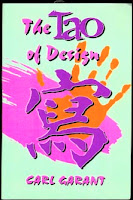
Find your truth. Know your mind. Follow your heart. Love eternal will not be denied. Discernment is an integral part of self-mastery. You may share this post as long as author, copyright and URL https://designconsciousness.blogspot.com/ is included as the resource and shared on a non-commercial no charge basis. Please note … posts are continually being edited over time. Copyright © 2023 C.G. Garant. All Rights Reserved. (Fair use notice) You are also invited to visit https://designmetaphysics.blogspot.com/,   and https://sagariandesignnetwork.blogspot.com and https://www.pinterest.com


September 29, 2016

Design Marks a New Era: The recognition of the Soul


Conceptual impressions surrounding this post are yet to be substantiated, corroborated, confirmed or woven into a larger argument, context or network. Objective: To generate symbolic links between scientific discovery, design awareness and consciousness.

So just what is the meaning and purpose behind design? Why does design exist? What is its purpose? Where does it come from? Who, what or whomever created it? What is the source of design? Where does this source originate? What does design have to do with me? Below are just some of the objectives of design.
- To sensitize humanity to the importance of creating in harmony with Nature.
- To nurture a Taoist-like point of view when participating in the creative process.


- To demonstrate through the creative process the universality of the design function as the primary method by which all Life evolves and made manifest.
- To reveal through interpretive verse and association the meaning and purpose of the design function as it relates to all Life forms.
- To demonstrate the unifying power of design as the integrating force by which all of Consciousness is made aware of itself.
- To demonstrate that design is the universal process towards self-empowerment and enlightenment, which is the primary function of involution and evolution.
- To demonstrate that design works in correspondence with the Tao.
- To demonstrate that the harmonious evolution of consciousness at all levels of resonance is accomplished through design.
- To create a vocabulary and language for the Soul.
- To demonstrate that all desires and needs are reflections of a greater scheme of events symbolically expressed in form and that design re-presents a symbolic network that brings reality to this experience.
- To demonstrate that there are realms, i.e. dimensions, domains and realities, existing that remain undetectable to human observation, perception and awareness.
- To demonstrate that design allows us the opportunity to expand and in consciousness through symbolic methods of translation and interpretation.


- To demonstrate to ourselves that design requires we become multi-dimensional in our perceptions of the world, and that "authentic power" is internal and rooted in the soul.

- To demonstrate to ourselves that design fashions the symbolic journey of the soul and that our intentions, i.e. choices, determine the situations that shape our experiences.
- To prove to ourselves that the path, i.e. the Tao of design, is eternal and brought to awareness by virtue of our heart's focus.
- To prove to us that Life lies within and beyond the shells of form.
- To learn to describe, transfigure and create reverently and responsibly.
- To accept the principles and forces surrounding the value of Life by recognizing and supporting those design principles associated with Earth, solar, galactic and universal consciousness.
- To demonstrate and bring recognition to a higher quality of mind contained within the needs and desires of the soul, which is the true impetus behind every e-motion and feeling.
- To demonstrate that the creative process is dependent upon our ability to make connections and that naturally create the symbolic pathways toward higher orders of awareness and therefore greater consciousness.

Design demonstrates that there is a deeper dynamic (order/chaos) expressed in all that is both seen and unseen.


- To demonstrate that all forms of energy are symbolic and metaphorical reflections of a holographic presence emerging from within constraints of space and time - a non-physical dynamic (desire, need) that administers design consciousness as its fundamental method of expression.

- To reflect upon our soul's desire by witnessing and bringing into manifestation what we feel. 
- To demonstrate to ourselves and others that design gives expression to a non-physical dynamic that reaches beyond the constraints of mind, body and emotion.
- To demonstrate to ourselves that all dimensions are symbolic in character and origin. Every circumstance is designed to change and adapt in reference to what our soul desires -we gather and collect these events and call them experience.
- To learn that design describes the method in which energy is exchanged, transformed and interpreted universally. Design is the universal language of consciousness.


"Man has no Body distinct from his soul: for that called Body is a portion of a Soul discerned by the five senses, the chief inlets of Soul in this age:
William Blake

* * *
- To learn by means of the creative process that design is a symbolic methodology meant to expand consciousness through awareness.
- To demonstrate that design appears before human consciousness in the form of duality, a linear conjecture meant to reflect upon the dynamic created between two or more symbolic elements/agents


- To demonstrate that design serves the Tao by harboring the instruments necessary to "bring to Life" the concepts of meaning and purpose.
- To illustrate that the purpose of design is to expand awareness in both content and context. Design creates the matrices in which all things are linked microcosmically and macrocosmically.
- To learn to establish a harmonic resonance with Gaia by means of a collective language designed to both create and respond to rapid change.    
- To demonstrate the universality of the design function by creating tangible and intangible correspondences at all levels of conscious awareness.
- To prove to ourselves that the intuition summons the "voice of the non-physical world" and where the sound of silence becomes the common language by which our feelings and soul's desires are conveyed and made manifest.
- To demonstrate that consciousness shapes light (waves) into form (particles) by means of focusing our awareness through experience.
- To propose that humanity when purposely co-creating within the parameters of Nature, becomes the primary contributor to the expansion, contraction and evolution of both the planet and the species. 
- It’s no longer about what you believe rather it’s more about what your being led to believe - not what you already know.


Design is about balance and harmony

* * *

Design Hypothesis: 
Consciousness is conceptual, illusional, symbolic, metaphoric and virtual in character. Consciousness is the quintessential archetype. Consciousness is the concomitant consequence associated with a range of multidimensional patterns of energy whose origin rests beyond the subconscious. Awareness brings forward a “sense of consciousness” by fostering correspondences and fusing the concepts of meaning and purpose. Metaphysical in content and context, quantum, fractal and holographic in representation, all forms of energy/Life are revealed and made apparent by means of Design. Design is lovingly veiled in all that can be seen, known, measured and/or felt. (12.10.2022) 

Design describes a metaphysical and multidimensional process. The design process is dependent upon knowledge, understanding, intention, intuition, imagination and awareness. Design creates a network of energy in motion (EIM) between fields/states/points/agents and patterns of awareness. Design creates a virtual, symbiotic and metaphoric lattice between consciousness, the subconscious and the unconscious, the tangible and the intangible, the known and the unknown, the seen and the unseen. All forms of energy in motion are based upon principles of meaning and purpose both felt and understood. (01.13.2023) 

What is a designer? Designers are men and women who are faithful to themselves and others, who creatively abide and amalgamate their skills and beliefs with love and integrity - the goal: personal, collective, global and soular balance and harmony. (09.01.2022) 


Design has a science and philosophy all its own, a language that connects the realms of Truth, Beauty and Goodness. If you must ask what design is - like love - no one would be able to fully explain it to you.

* * *

The Meaning and Purpose of Design: A Philosophical and Metaphysical Inquiry 

The concept of design is foundational, expansive, encompassing aesthetic, functional, symbolic, and metaphysical in dimension. Design, in its broadest and most philosophical sense, is not merely a human artifact or process—it is a universal principle by which form, function, and meaning are given expression in both the material and immaterial realms. The search for the meaning and origin of design invites inquiry into its metaphysical source, its ontological basis, and its teleological function in the evolution of consciousness and life. 

1. The Origins and Essence of Design 

Design is often treated as a human endeavor—an application of creative intelligence toward problem-solving and expression. However, a more profound view situates design as an ontological principle embedded in the very structure of reality. The origins of design may be interpreted through metaphysical traditions such as Taoism, where the Tao is conceived as the ultimate source and pattern of all existence—an unnameable flow from which all forms arise and to which all return (Lao Tzu, Tao Te Ching, trans. Mitchell, 1988). In this sense, design is not created but revealed; it is the emergent order within the seeming chaos of existence—a holographic resonance that unites the seen and unseen. 

Design, then, is both the process and pattern by which consciousness interacts with the material world. It can be seen as a cosmic grammar—a symbolic system of organization that underlies both natural and human phenomena. As Christopher Alexander notes in The Nature of Order, design is intrinsic to how life unfolds, “a field-like quality which exists in space and matter itself, and which arises as part of the wholeness of the universe” (Alexander, 2002). 

2. Design as Evolutionary Process 

Design plays a pivotal role in the evolution of consciousness and the unfolding of life. It is not simply a tool of creation, but the mechanism by which life organizes itself across scales—from atoms to galaxies, from individual consciousness to collective awareness. As Teilhard de Chardin proposes in The Phenomenon of Man (1955), evolution is not just biological but also noetic (pertaining to consciousness), moving toward greater complexity and reflective self-awareness. Design serves as the vehicle for this teleological movement—what might be called the “involution” and “evolution” of spirit into matter and back again. 

Through symbolic expression, ritual, language, and creativity, human beings participate in this unfolding by “co-designing” reality. The idea that design “requires we become multi-dimensional in our perceptions” reflects a process of expanding our inner and outer awareness—aligning human intention with the deeper patterns of the cosmos. Jung’s concept of individuation—the process by which the self becomes whole through integration of unconscious contents—parallels this journey (Jung, 1966). Design, then, is a psychological and spiritual map as much as it is a physical or artistic one. 

3. Symbolism and the Language of the Soul 

Design operates as a symbolic language—a way to transmute inner states into outer forms. The symbolic nature of design allows it to communicate beyond the limits of logic or linear thought, conveying meaning through metaphor, archetype, and resonance. Carl Jung emphasized that symbols are “transformers of energy” and containers of unconscious content (Jung, 1964). In this view, the act of designing becomes a sacred ritual—translating the ineffable into form, bridging the soul and the world. 

This symbolic function of design is particularly significant in spiritual and esoteric traditions, where symbols are used to align human consciousness with higher truths or divine principles. Whether in sacred geometry, mandalas, architecture, or mythological motifs, design becomes a vessel for transcendent meaning (Lawlor, 1982). 

4. The Ecological and Cosmic Context of Design 

The notion that design sensitizes humanity to Nature reflects deep ecological awareness. Design is not meant to dominate or extract from the Earth, but to harmonize with it—reflecting principles of biomimicry, regeneration, and sustainability (Benyus, 2002). When aligned with natural systems, design becomes a form of ecological wisdom. The Taoist imperative to act “in accordance with the flow” (wu wei) suggests a mode of creative participation that is humble, reverent, and attuned to the larger whole. 

Design also connects human experience with the cosmic suggesting that individual and planetary evolution are interlinked. As Rupert Sheldrake’s theory of morphic resonance posits, patterns of form and behavior are influenced by collective memory fields, meaning that every act of design may reverberate far beyond its immediate context (Sheldrake, 1981). Through intentional, soul-rooted design, humans contribute to the evolution of both personal and planetary consciousness. 

5. Consciousness, Energy, and Design 

Design may be understood as a function of consciousness shaping energy into form. In quantum physics, the observer effect and wave-particle duality suggest that consciousness plays a role in manifesting reality (Heisenberg, 1958; Wheeler, 1983). The proposition that “design shapes light (waves) into form (particles)” is not merely poetic—it aligns with interpretations of quantum phenomena and consciousness studies. Design, in this sense, is the intentional focusing of awareness that catalyzes potential into actuality. 

Moreover, design is inseparable from emotion and desire, which are themselves energetic expressions of consciousness. The soul’s longing, expressed as feeling and intuition, guides the creative process. As philosopher Henri Bergson argued, life is driven by an élan vital, a vital impulse that seeks expression and novelty (Bergson, 1911). Design channels this impulse into symbolic configurations that nourish, heal, and awaken. 

6. Toward a Unified Vision of Design 

Ultimately, design is a unifying function. It integrates the inner and outer, the symbolic and the material, the individual and the collective, the temporal and the eternal. It is the method by which the soul engages the world, and the cosmos expresses itself through form. As a universal language, design invites us to “see with new eyes,” as eco-philosopher Joanna Macy puts it (Macy & Brown, 2014). It calls us into deeper alignment with the sacred order of life—a resonance that is both personal and universal. 

In this light, design is not merely a skill or a profession; it is a path—a Tao—that reveals the interconnectedness of all things and offers a means to walk with awareness, purpose, and reverence. 

Select References 
• Alexander, C. (2002). The Nature of Order: An Essay on the Art of Building and the Nature of the Universe. Center for Environmental Structure. 
• Bergson, H. (1911). Creative Evolution. Macmillan. 
• Benyus, J. (2002). Biomimicry: Innovation Inspired by Nature. Harper Perennial. 
• Chardin, T. de (1955). The Phenomenon of Man. Harper & Row. 
• Heisenberg, W. (1958). Physics and Philosophy: The Revolution in Modern Science. Harper & Brothers. 
• Jung, C. G. (1964). Man and His Symbols. Dell. 
• Jung, C. G. (1966). The Practice of Psychotherapy. Princeton University Press. 
• Lawlor, R. (1982). Sacred Geometry: Philosophy and Practice. Thames and Hudson. 
• Lao Tzu. (1988). Tao Te Ching (S. Mitchell, Trans.). Harper Perennial. 
• Macy, J., & Brown, M. Y. (2014). Coming Back to Life: The Updated Guide to the Work that Reconnects. New Society. 
• Sheldrake, R. (1981). A New Science of Life: The Hypothesis of Morphic Resonance. Blond & Briggs. 
• Wheeler, J. A. (1983). "Law without Law." In Quantum Theory and Measurement, eds. Wheeler and Zurek. Princeton University Press. 

The author generated this text in part with GPT-3, OpenAI’s large-scale language-generation model. Upon generating draft language, the author reviewed, edited, and revised the language to their own liking and takes ultimate responsibility for the content of this publication.

* * *


"To believe is to accept another's truth.
To know is your own creation."
Anonymous


Edited: 09.30.2016, 01.11.2017, 03.05.2018, 10.27.2018, 08.27.2019, 01.23.2021, 08.31.2021, 11.01.2021, 03.31.2022, 07.01.2022, 02.14.2023, 03.25.2023, 05.17.2023, 11.22.2023, 04.21.2024, 06.24.2025, 02.19.2026
Find your truth. Know your mind. Follow your heart. Love eternal will not be denied. Discernment is an integral part of self-mastery. You may share this post as long as author, copyright and URL https://designconsciousness.blogspot.com/ is included as the resource and shared on a non-commercial no charge basis. Please note … posts are continually being edited over time. Copyright © 2023 C.G. Garant. All Rights Reserved. (Fair use notice.) You are invited to visit https://designmetaphysics.blogspot.com/.  Now visit Design Consciousness on https://www.pinterest.com


Add to Technorati Favorites